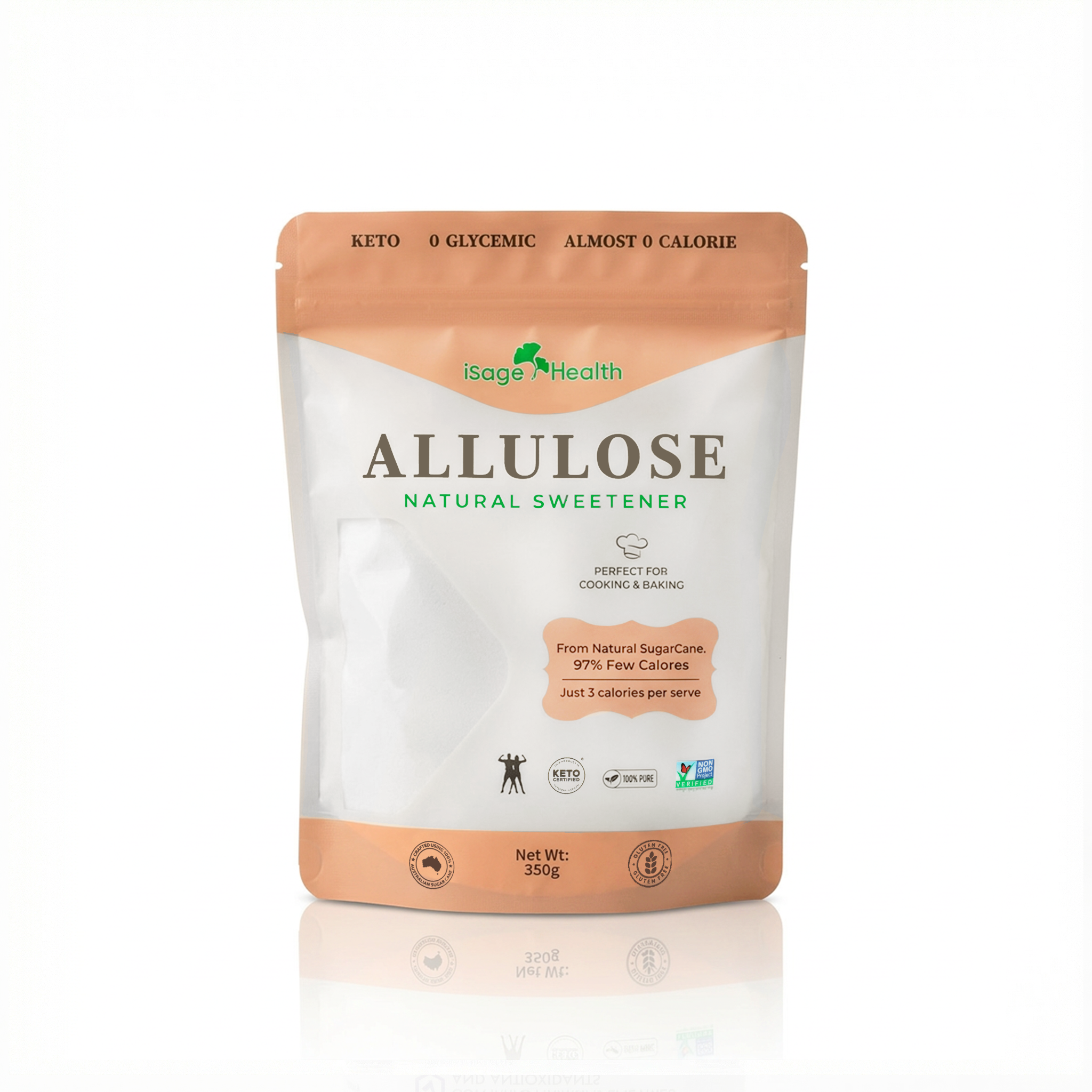
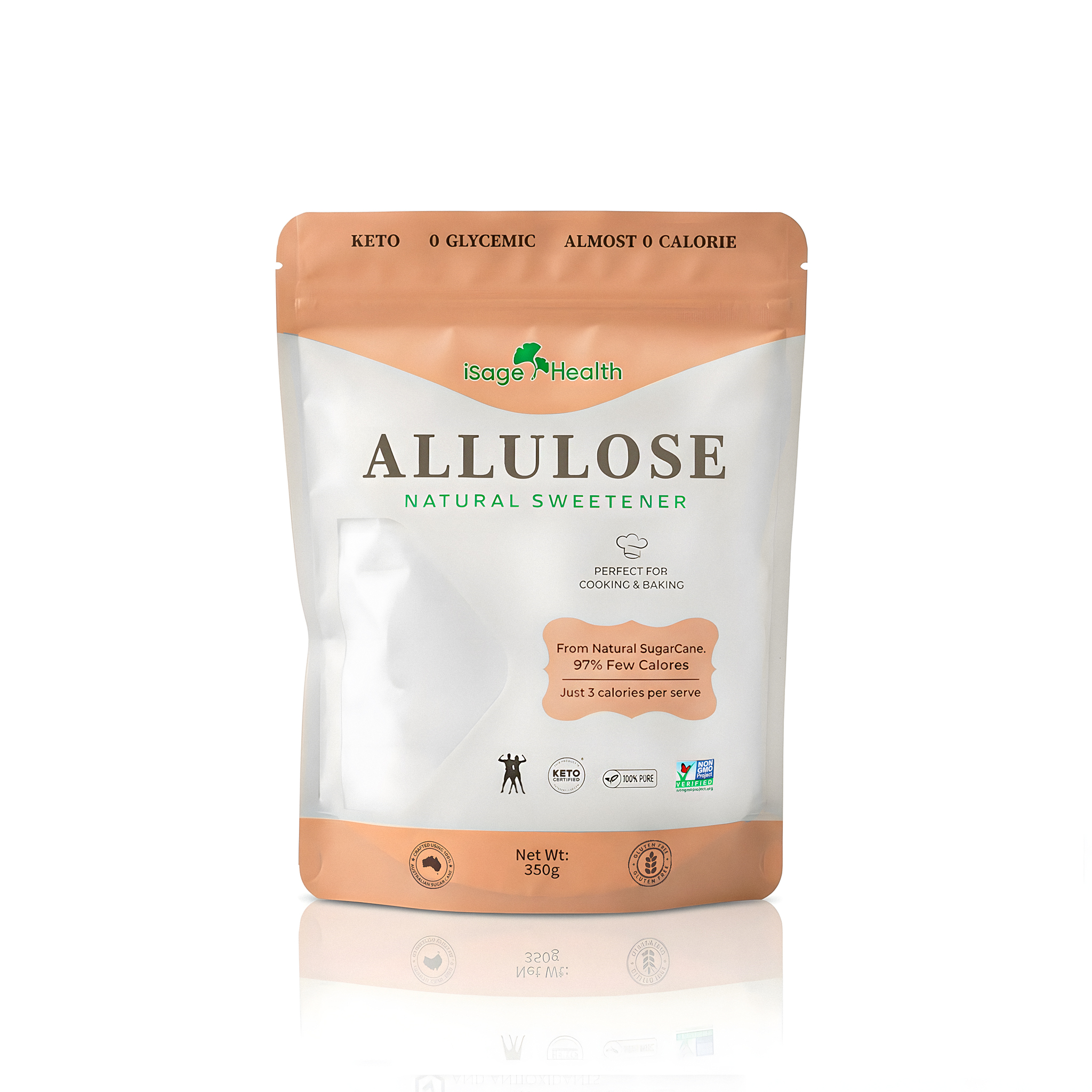
Allulose (also known as D-psicose) is a rare monosaccharide found naturally in small quantities in foods like figs, raisins, maple syrup, wheat and molasses. Structurally, it is the C-3 epimer of fructose — meaning it is almost molecularly identical to fructose, but with a single difference in its molecular arrangement that completely changes how your body processes it.
Unlike sugar and most other sweeteners, allulose is absorbed through the small intestine but not metabolised. It passes through the body and is excreted in urine, contributing very little to your caloric or glycaemic load. This is not a synthetic compound or an artificial invention — it is a sugar that nature already produces, now made available in meaningful quantities through an enzyme-based process that converts fructose into allulose.
In Australia, FSANZ has assigned allulose an energy factor of 2 kJ/g — compared to 17 kJ/g for regular sugar. That means allulose contributes approximately 88% less metabolisable energy than sugar per gram. FSANZ approved allulose as a novel food in August 2024 (Application A1247), permitting it as a tabletop sweetener and in a wide range of manufactured foods.