Methylene Blue and Your Skin

Methylene blue has been around for a very long time. It was first made in the 1870s as a fabric dye, and it went on to become a hospital staple. It's on the World Health Organization's list of essential medicines, and doctors still use it today.
What's surprising is where the research has gone since. Scientists have become curious about what methylene blue does inside our cells, and one of the more interesting places that curiosity has led is your skin.
How It Works, Simply Put
Every cell in your body has tiny power stations called mitochondria. They turn the food you eat into energy. As a by-product, they also throw off free radicals, a bit like exhaust from an engine.
A little exhaust is normal. Too much, and it starts damaging the cell around it. That build-up, called oxidative stress, is one of the main reasons skin ages: lines, uneven pigment, and cuts that take longer to heal.
Methylene blue works right inside those power stations. It helps electrons flow more smoothly through the energy-making process, so the engine runs cleaner. More energy, less exhaust. That's the short version, and it's why researchers wondered what it might do for ageing skin.
What the Skin Research Found
In 2017, a team at the University of Maryland tested methylene blue on human skin cells in the lab. They used cells from healthy people of different ages, including donors over 80, and cells from children with progeria, a rare condition that makes the body age far too fast.
They put methylene blue up against several other well-known antioxidants, NAC among them. Methylene blue came out on top for clearing free radicals from the cells' power stations and for getting tired skin cells growing again. In the older cells, it pushed a range of ageing markers back towards what you'd see in young cells.
The team then tried it on lab-grown 3D skin, which behaves much more like the real thing. Here's what they saw:
- the skin held more moisture, and its deeper layer grew thicker
- small wounds closed faster
- the skin made more elastin and collagen, the proteins that keep it firm and springy
- it caused no irritation, even at strong concentrations
This was skin in a dish and in a lab model, not on real faces, and the methylene blue was applied directly to the skin. We still need proper trials in people. Even so, it's one of the more promising pieces of skin research I've come across, and it's easy to see why the beauty industry has started paying attention.
Quality Matters More Than Anything
Not all methylene blue is made for people. The same blue dye is sold for cleaning fish tanks and for staining samples in labs, and those grades can carry impurities, including heavy metals, that you really don't want in your body.
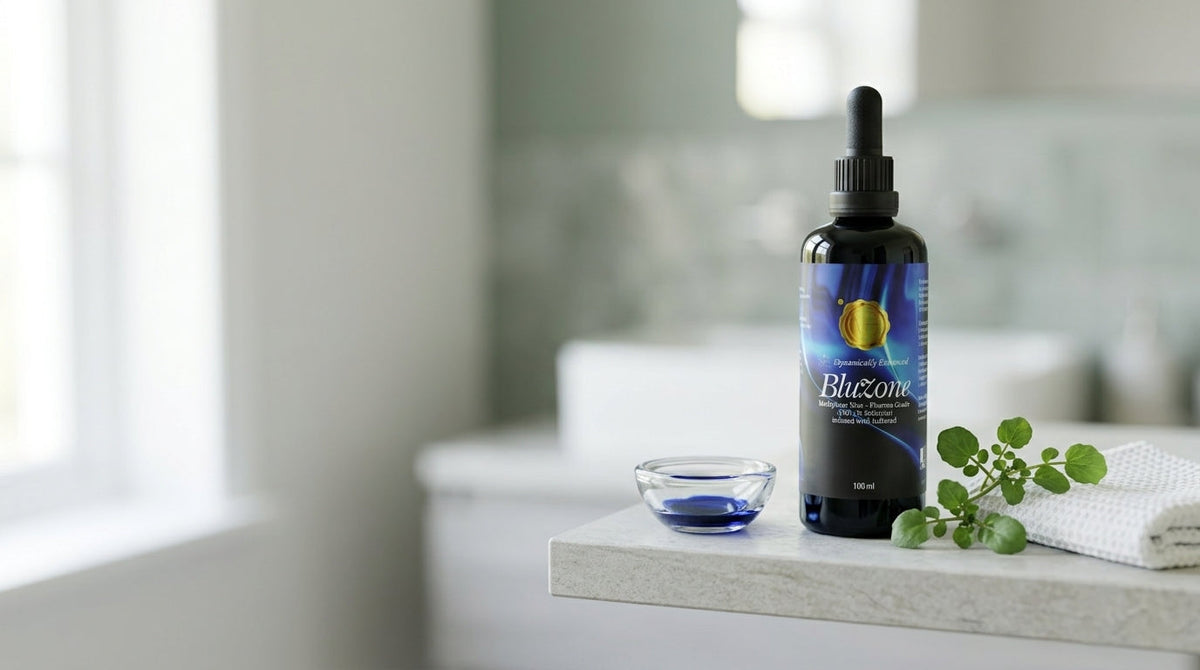
If you're going to use it, it has to be pharmaceutical grade. That's the standard I'd insist on, and I'd be wary of any product that can't tell you exactly which grade it is.
Who Should Steer Clear
Methylene blue is powerful, and that means it isn't for everyone.
The big one is medication. It can interact seriously with antidepressants and other drugs that affect serotonin, so if you take any of those, don't use it without your doctor's go-ahead. It's also unsuitable for people with G6PD deficiency, an inherited enzyme condition, and for anyone pregnant or breastfeeding. If you have kidney problems or any other health condition, check with your practitioner first.
One harmless surprise: taken by mouth, it can turn your urine blue or green for a day or so. Nothing to worry about, but it's nice to know in advance.
My Take
Methylene blue is a 150-year-old compound with a surprisingly modern research story, and the skin findings are genuinely exciting. Just treat it with respect. Choose the right grade, check it suits you, and don't expect a lab result to translate into a miracle overnight.
Julyet, iSage Health
Healing with Tradition, Science & Wisdom
This article is general information only and is not medical advice. Always read the label and follow the directions for use. Speak with your healthcare practitioner before using methylene blue, particularly if you take medication, are pregnant or breastfeeding, or have a health condition.
Reference
- Xiong ZM, et al. Anti-aging potentials of methylene blue for human skin longevity. Scientific Reports, 2017.
Follow iSage Health