Berberine: The Bitter Herb Worth Knowing About

Few herbs have had the second life berberine is having right now. Customers ask me about it every week.
My own introduction to berberine came a number of years ago. As a woman getting older, I wanted some support keeping my blood sugar steadier, so I started taking it just before meals, usually about 20 minutes beforehand. I found it really worthwhile. My weight was easier to manage while I was on it, and I even dropped a few kilos along the way.
There was a bonus, too. Berberine has a long traditional reputation as an antimicrobial and anti-parasitic herb, and with my love of sushi and sashimi, that gave me real peace of mind.
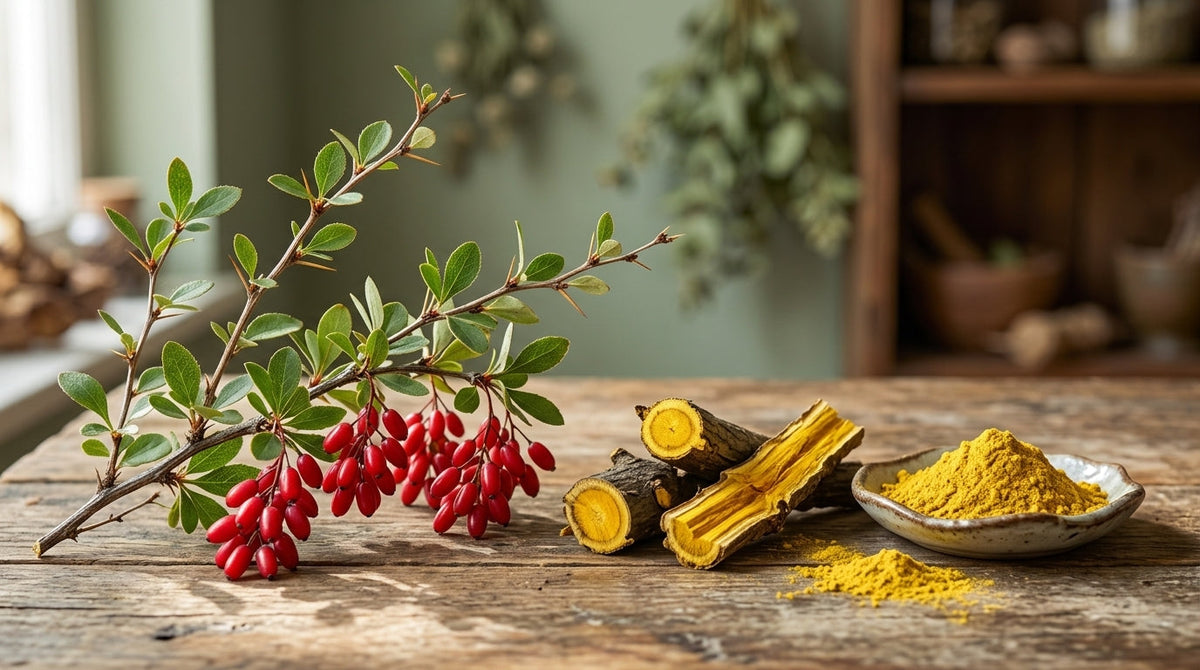
Berberine is a bright yellow alkaloid with a seriously bitter taste. It's found in the roots and bark of plants like barberry (Berberis vulgaris), goldenseal and Oregon grape. Traditional Chinese Medicine and Ayurveda used these plants for a very long time, mostly for digestion and gut complaints, long before anyone isolated the compound itself.
I've always had a soft spot for the bitter herbs. In my experience people underestimate them, and berberine is a good example of an old remedy that modern research has well and truly caught up with.
How Berberine Works
Most of the interest comes down to an enzyme called AMPK. Picture a master switch inside each of your cells. It senses how much energy is around and decides what happens next: burn fuel, store it, or pull more glucose in from the blood. Berberine appears to flick that switch on.
That one action has knock-on effects in a few places at once, which is why berberine turns up in research on blood glucose, cholesterol and body composition all at the same time. It also works in the gut, where it has a long traditional history and seems to influence the balance of bacteria living there.
When I explain it in a consultation, I keep it simple. Berberine nudges your metabolism to use fuel a little more efficiently. It doesn't do the work for you.
What the Research Has Found
Berberine is one of the most studied herbal compounds around. Dozens of clinical trials have now been pooled into larger reviews, which is far more than most plant extracts can point to.
Glucose metabolism. This is where most of the work has been done. A 2024 review of 50 trials involving more than 4,000 people found berberine supported healthier fasting and after-meal glucose readings in adults with type 2 diabetes, both on its own and alongside their usual medication. An earlier review of 46 trials found similar changes, plus improvements in insulin sensitivity.
Cholesterol and triglycerides. The same reviews picked up modest improvements in LDL cholesterol, total cholesterol and triglycerides. A 2025 review of placebo-controlled trials in people with metabolic syndrome reported the same pattern.
Waistline. That 2025 review also found a small but consistent reduction in waist measurement, the stubborn tummy fat that tends to creep on in midlife. I'd describe it as a helping hand, not a weight-loss pill.
Gut health. This is berberine's traditional home. A large 2023 umbrella review noted benefits in some gut-related outcomes too, which fits what herbalists have used it for over centuries.
Now the honest part. Many of these trials were small or short, quite a few were run in China, and the reviewers themselves say better-quality studies are still needed. The results are encouraging. They're not a guarantee of what berberine will do for you.
What I see in clinical practice tells its own story. When I recommend berberine to clients and it agrees with them, many choose to stay on it long term. It's rarely the numbers they mention first. It's how they feel, and especially how their gut feels.
How to Take It
Berberine usually comes as a capsule. Your body clears it fairly quickly, so most studies split the daily amount across two or three doses taken with meals rather than having it all at once. Taking it with food also tends to be kinder on the stomach.
Follow the directions on your label. The pack size, strength and dosing for our Berberine are all on the product page.
Give it time, too. The trials mostly ran for one to three months, and that matches my own view of herbs generally: they work quietly, and they reward consistency far more than enthusiasm in the first week.
Berberine Isn't for Everyone
I'm a big fan of this herb, but I'd never hand it to everybody.
Please skip it if you're pregnant or breastfeeding. It isn't suitable for babies or young children either.
If you take any prescription medication, talk to your doctor or pharmacist first. Berberine changes how the liver processes a number of drugs, and if you're already on something for blood sugar, the two together can add up. The same goes for anyone with a diagnosed health condition. Berberine sits alongside your medical care. It never replaces it.
Some people get a bit of tummy upset when they start, mostly constipation, loose bowels or bloating. Taking it with meals usually helps. If it doesn't settle, stop and have a chat with your practitioner.
My Take
Berberine is one of those rare herbs where tradition and modern research largely agree. It's no miracle. Paired with good food, regular movement and advice from someone who knows your health history, though, it can be a genuinely useful ally.
You'll find our Berberine, with full product details and directions, in the iSage Health shop.
Julyet, iSage Health
Healing with Tradition, Science & Wisdom
This article is general information only and is not medical advice. Always read the label and follow the directions for use. Speak with your healthcare practitioner before starting berberine, particularly if you are pregnant, breastfeeding, taking medication or managing a health condition.
References
- Wang J, et al. Effects of administering berberine alone or in combination on type 2 diabetes mellitus: a systematic review and meta-analysis. Frontiers in Pharmacology, 2024.
- Guo J, et al. The effect of berberine on metabolic profiles in type 2 diabetic patients: a systematic review and meta-analysis of randomized controlled trials. Oxidative Medicine and Cellular Longevity, 2021.
- Liu D, et al. Efficacy and safety of berberine on the components of metabolic syndrome: a systematic review and meta-analysis of randomized placebo-controlled trials. Frontiers in Pharmacology, 2025.
- Li Z, et al. Berberine and health outcomes: an umbrella review. Phytotherapy Research, 2023.
Follow iSage Health